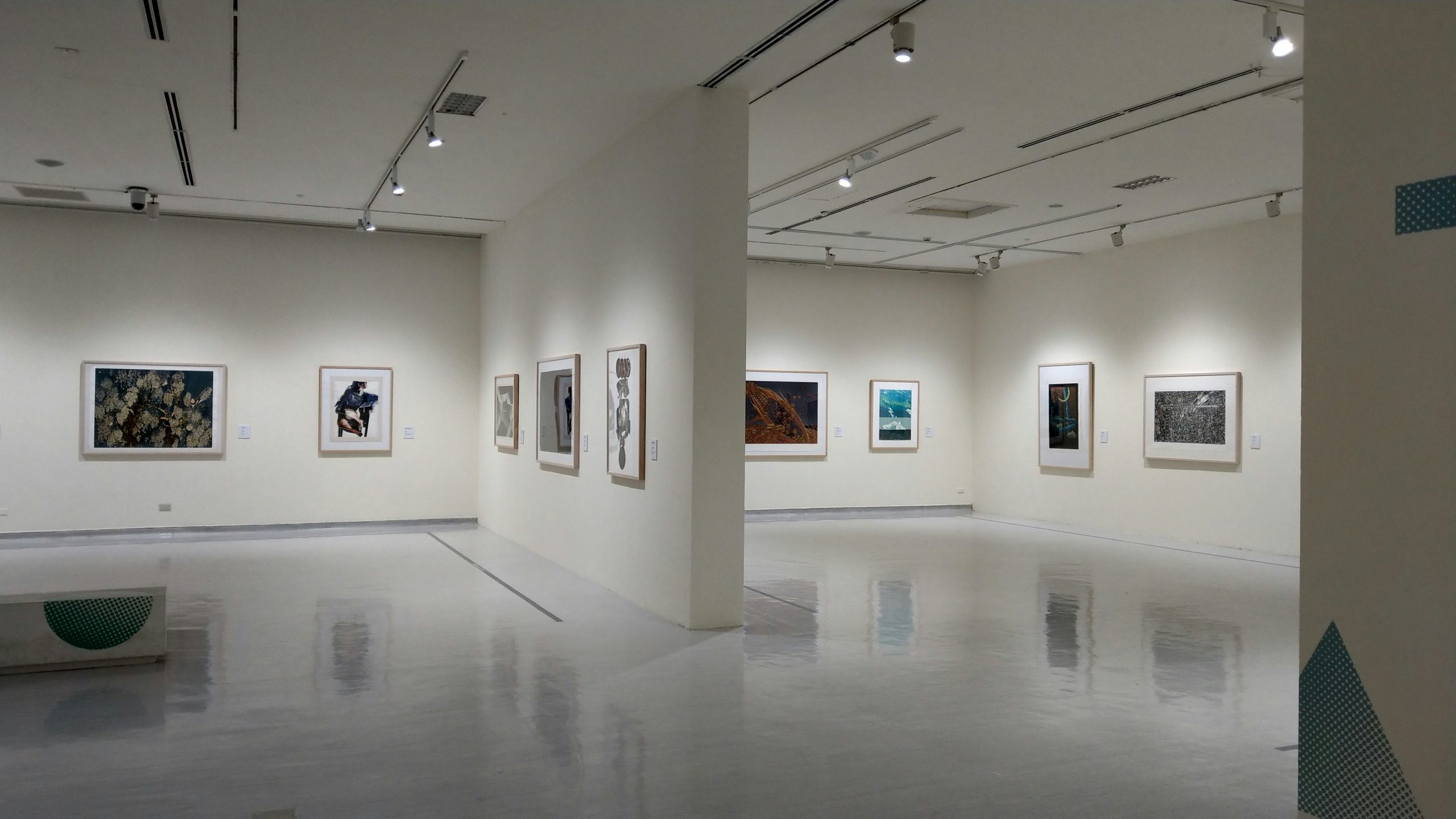
Guiding Question
How do mediation practices and narrative infrastructures reshape the conditions under which African art scenes become visible and interpretable within European cultural spaces?
Introduction
The presence of artists from a wide range of African and diasporic contexts has increased across many European cultural spaces.
Biennials, art centres, museums, residency programmes, fairs and professional networks have contributed to a greater circulation of artworks, artists and narratives.
Yet greater visibility does not necessarily mean being understood differently.
An artwork never circulates solely through its physical presence in an exhibition space. It is accompanied by texts, curatorial choices, references, mediation practices and institutional frameworks that shape how it is received.
The question, therefore, is not only how African art scenes gain access to spaces of visibility in Europe.
It is also how that visibility is produced, organised and made intelligible.
This Reading proposes the notion of narrative infrastructures to describe the set of practices and devices that accompany the circulation of artworks and help shape the frameworks through which they are presented, interpreted and recognised.
I. Visibility as a constructed process
Cultural visibility is often described as an outcome: an artwork is exhibited, an artist is programmed, a cultural scene gains international exposure.
This understanding remains incomplete.
Visibility depends on a network of relationships between institutions, curators, professional networks, media, editorial spaces and publics.
It is therefore less a fixed condition than a process.
An institution provides an exhibition space. A professional network enables circulation. A curator constructs a framework of interpretation. A catalogue text provides references. Specialist media or editorial platforms extend interpretation beyond the exhibition itself.
Visibility emerges from the interaction of these different functions.
This perspective also makes it possible to distinguish between two questions that are often conflated: access to visibility and the conditions under which that visibility is interpreted.
Greater representation within European institutions may constitute a significant transformation without automatically changing the categories through which artworks are understood.
It is precisely in this gap between presence and interpretation that one of the central challenges of contemporary cultural circulation lies.
II. Narrative infrastructures
Artworks circulate together with narratives.
Curatorial texts, catalogues, institutional discourse, interviews, educational and mediation programmes, specialist media, research, residencies and professional networks all contribute, in different ways, to contextualising their presence.
These elements form what can be understood as narrative infrastructures.
They do not necessarily tell a single story. Rather, they create an interpretive environment in which certain references become visible and certain relationships become intelligible.
This function becomes particularly important when artworks circulate between distant contexts.
Contemporary African art scenes are extremely diverse. They develop across different cities, institutions, networks, markets and social environments.
Grouping them under a broad category such as “African art” may make certain trajectories visible, but it may also obscure this diversity.
The purpose of narrative infrastructures is therefore not simply to provide more information.
It is to create frameworks open enough for artworks to exist beyond a limited set of predefined geographical, identity-based or geopolitical categories.
III. From visibility to intelligibility
This distinction leads to a separation between two dimensions: visibility and intelligibility.
Visibility refers to the possibility of appearing within a public, institutional or professional space.
Intelligibility concerns the conditions that make it possible to understand the references, contexts and relationships that give meaning to that presence.
An artwork may therefore enjoy a high degree of visibility while still being interpreted through a particularly narrow framework.
Conversely, careful contextualisation can open several levels of interpretation and allow publics to engage more fully with the complexity of an artistic practice.
The question then becomes:
How can increased visibility also create new possibilities for understanding?
This question shifts the role of mediation.
Mediation no longer takes place only after artworks have been selected in order to “explain” them to an audience. It becomes part of the very conditions through which artworks become readable in another context.
IV. Explaining without reducing
Every form of mediation nevertheless faces a difficulty: it must make something accessible without simplifying it excessively.
An international exhibition cannot fully reconstruct every historical, social and aesthetic context surrounding each artwork.
It necessarily selects.
Selection becomes problematic when a limited set of categories repeatedly determines how certain artistic practices are presented.
Geographical origin, postcolonial questions, migration, identity or political transformation may be important dimensions of an artwork.
But they do not necessarily exhaust its meaning.
Artistic practices may also be shaped by formal research, urban trajectories, technologies, creative economies, professional circulation or references that extend far beyond these categories.
The challenge is therefore not to remove contextualisation.
It is to prevent one context from becoming the only interpretive frame.
V. Mediation also produces meaning
Cultural mediation does not simply transmit a meaning that already exists.
It participates in its construction.
The title of an exhibition, its spatial organisation, the texts that accompany it, the relationships established between artists and the references offered to audiences all influence the way artworks become intelligible.
Recognising this role does not mean treating mediation as arbitrary.
It means acknowledging that mediation produces a point of view.
Several questions then become important:
Which contexts are made visible?
Which references are mobilised?
Which relationships are constructed?
Which histories are prioritised?
Which perspectives remain less present?
These questions allow mediation to be understood not as a secondary operation, but as a constitutive dimension of international cultural exchange.
VI. A relational architecture of visibility
The visibility of African art scenes in Europe cannot ultimately be attributed to a single type of actor.
Institutions provide resources, spaces and forms of recognition.
Networks facilitate connections and circulation.
Curators construct frameworks of interpretation.
Research and editorial spaces provide contextual knowledge.
Publics participate in reception and in the transformation of meaning.
These functions are neither identical nor interchangeable.
Their interaction forms a relational architecture of cultural visibility.
This perspective avoids a simplistic opposition between institutions and independent actors.
The more relevant question is how different functions — selection, mediation, contextualisation, dissemination, research and legitimation — are distributed among actors and how they combine.
It also introduces the question of power.
Who selects?
Who controls resources?
Who produces the categories through which artworks are presented?
Who defines the narratives accompanying their circulation?
Who benefits from the visibility that is produced?
To analyse narrative infrastructures is therefore also to analyse the institutional and relational conditions within which they operate.
VII. From art scenes to a broader question
The case of African art scenes in Europe ultimately points to a transformation that extends far beyond this particular field.
Across many cultural sectors, the question is no longer simply one of dissemination.
Festivals, cooperation programmes, artistic residencies, cultural policy, creative industries and cultural diplomacy all rely on mechanisms that organise visibility and produce frameworks of understanding.
Cultural circulation therefore concerns more than the movement of people, artworks or projects.
It also involves the circulation of categories, narratives, knowledge and forms of legitimacy.
For this reason, cultural visibility can itself be treated as an object of analysis.
It does not refer only to what appears.
It also refers to the system of relationships that determines how something becomes visible, within which framework, and with which possibilities for interpretation.
Conclusion
The growing presence of African art scenes within European cultural spaces is not, on its own, sufficient to describe the transformations currently taking place.
To understand these circulations, we must also examine the systems that accompany artworks: institutions, networks, curatorial practices, mediation, research and editorial spaces.
These narrative infrastructures contribute both to the production of visibility and to the production of intelligibility.
They can open new possibilities for understanding, but they can also reproduce established interpretive frameworks.
The central question is therefore no longer only what becomes visible.
It is also how visibility is constructed, contextualised and transformed into knowledge.
Through the case of African art scenes in Europe, a broader question concerning contemporary international cultural dynamics emerges: every form of cultural circulation also depends on narratives, mediation practices and processes of legitimation that help determine what can be seen, understood and transmitted.