Rap occupies a distinctive position within contemporary cultural landscapes. It can articulate experiences of discrimination, exclusion, social conflict and resistance while drawing on forms of expression that may provoke, polarise or challenge the boundaries of public discourse.
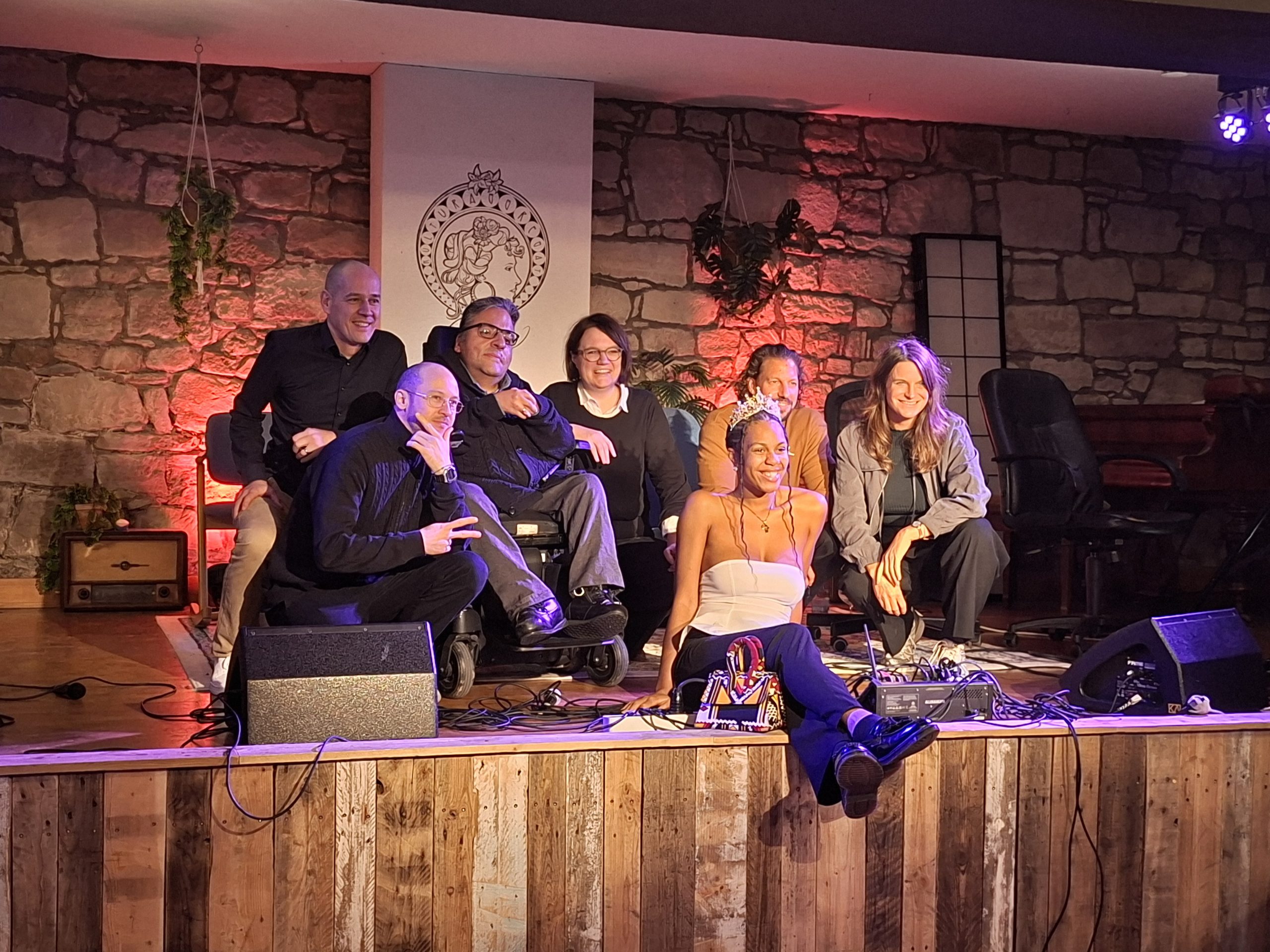
This tension was at the centre of the event “Wo Sprache zuschlägt – Rap als gesellschaftspolitischer Protest”, held in Freiburg as part of DenkArt.
Rather than asking whether rap is inherently emancipatory or problematic, the debate raises a more complex question: what happens when an artistic form of protest enters a public space in which artistic freedom, social interpretation and responsibility intersect?
Rap as a space for public expression
One of rap’s historical and contemporary functions lies in its capacity to make audible experiences that may receive limited space within dominant social narratives.
Social inequality, discrimination, exclusion, violence, relationships with institutions and minority experiences can be articulated from positions that are directly lived or consciously claimed.
This does not mean that every rap production is automatically political or protest-oriented.
Rather, the genre provides particular expressive resources — language, rhythm, narrative, performance and direct address — through which social experience can be transformed into public expression.
The visibility produced by rap therefore depends both on what is being narrated and on the position from which that narrative is articulated.
Protest does not mean expression without limits
Rap’s capacity to provoke is also one of its most visible areas of tension.
Exaggeration, confrontation, explicit language, representations of violence and deliberate transgression may form part of the artistic registers used by particular artists.
Yet identifying these elements as artistic expression does not automatically end the discussion about their effects.
Representing violence is not necessarily the same as glorifying it. Likewise, provocation can expose a social conflict without making every provocative statement immune from criticism.
The difficulty lies precisely in preserving these distinctions.
The boundaries between expressing anger, performance, reproducing stereotypes, artistic strategy and normalising violent discourse need to be examined through particular works and contexts rather than through general judgements about the genre as a whole.
When a cultural expression enters an institutional framework
The presence of rap within an institutionally organised public discussion produces a shift of its own.
A practice that circulates through songs, music scenes, digital platforms and listening communities also becomes an object of public discussion organised by an institution.
This transition is not neutral.
The framework of the debate selects particular questions, brings together particular participants and introduces categories through which rap is interpreted: protest, violence, empowerment, responsibility or polarisation.
The institution therefore does more than provide a venue for an already established cultural expression. It also participates in constructing a framework through which that expression becomes legible to other publics.
This is one of the central challenges of cultural mediation: making a practice available for discussion without reducing it entirely to the categories used to present it.
Visibility and the transformation of narratives
Entering an institutional public space can increase the visibility of a cultural practice and of the experiences it carries.
Yet this visibility also involves transformation.
An expression within a song does not function in exactly the same way when it is discussed at a panel, described by the media or analysed in an academic context.
Each transition introduces a new framework of interpretation.
Rap therefore offers a particularly revealing example of how cultural narratives circulate: they are not merely transferred from one space to another but are reframed by the structures that make them visible.
This observation also requires a distinction between visibility and recognition.
Being present in public debate does not necessarily mean being understood on one’s own terms. A cultural practice can gain exposure while still being interpreted through frameworks that are partly external to the context from which it emerged.
Who bears responsibility?
Responsibility therefore does not concern artists alone.
Artists remain responsible for the choices they make within their work and for the ways in which they mobilise particular images and representations.
But other actors also intervene in the circulation of that work.
Media organisations decide what to highlight. Platforms structure forms of dissemination and visibility. Institutions select the cultural practices they place into public discussion. Audiences interpret, appropriate or contest the content they encounter.
Cultural responsibility therefore appears distributed across several levels.
This perspective helps avoid two opposing reductions: treating the artist as solely responsible for every social effect of a work, or assuming that artistic status itself places an expression beyond critical discussion.
Disagreement as part of cultural space
Debates around rap also show that cultural mediation does not necessarily have to produce consensus.
Some artistic practices make conflicts, anger and experiences that are difficult to reconcile visible precisely because these tensions exist.
Creating a space for mediation therefore does not mean neutralising conflict.
It may instead involve creating conditions in which disagreement becomes interpretable: distinguishing between positions, contextualising forms of expression and allowing confrontation without erasing what separates them.
Rap is particularly revealing in this respect.
Because it brings together individual expression, social experience, artistic construction and public circulation, it exposes the tensions that emerge when a cultural voice also becomes an object of collective debate.
Conclusion
Rap cannot be reduced either to protest music or to a succession of provocations.
Its entry into public debate reveals a more complex relationship between expression, visibility, interpretation and responsibility.
The question is not to establish once and for all where the boundary between legitimate expression and transgression should lie.
It is rather to understand how that boundary is debated, by whom, in which contexts and under which conditions of visibility.
Rap therefore raises a question that extends far beyond the musical genre itself: how does a society organise the public circulation of cultural expressions that make its conflicts visible while remaining inseparable from some of the tensions they represent?