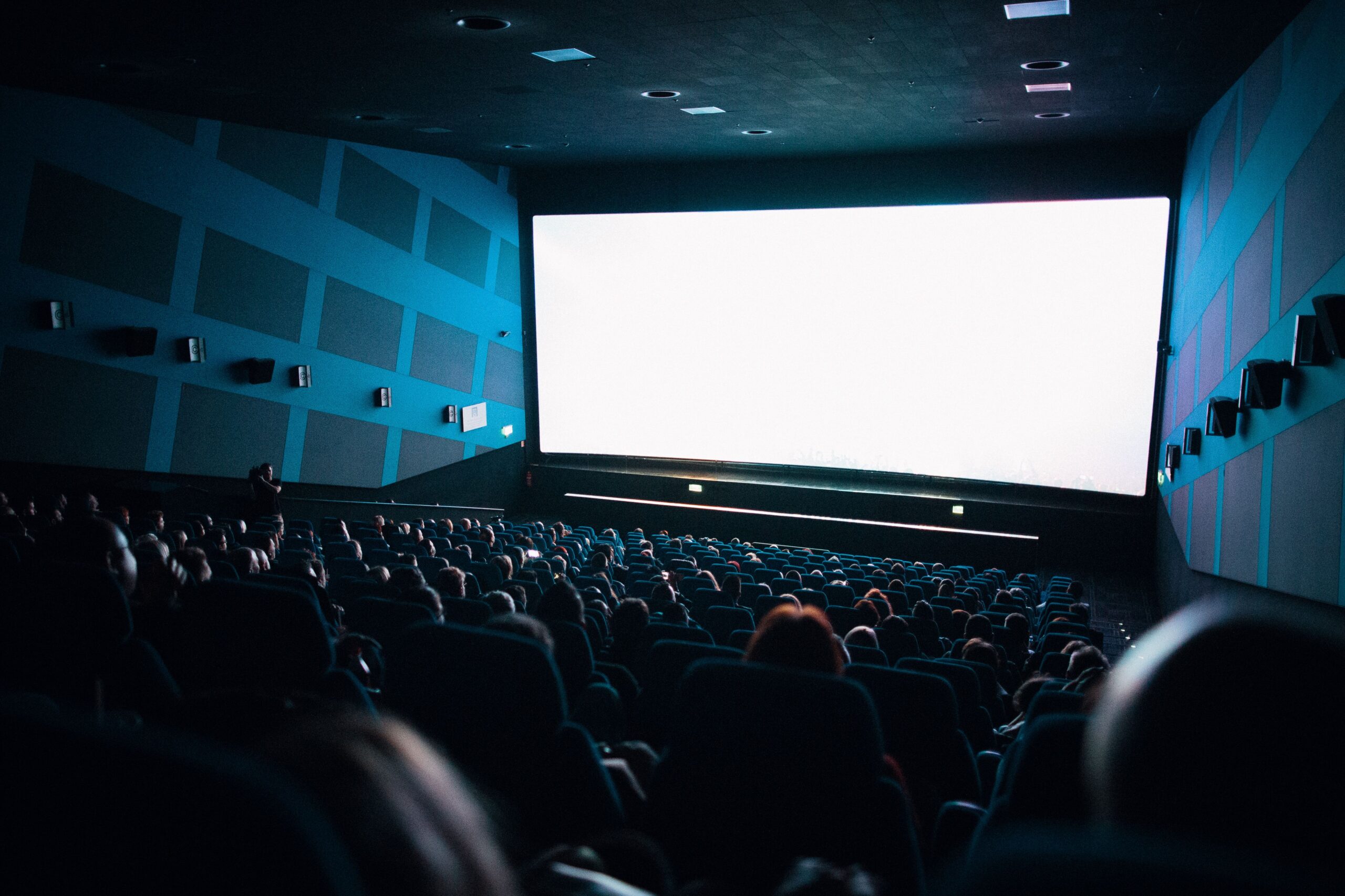
A film festival is not simply a succession of films selected for screening.
It also creates conditions of reception.
A venue, a programme, an audience, filmmakers, volunteers, conversations and organised discussions can transform a screening into a broader collective experience.
The opening of the tenth edition of the Greenmotions Film Festival on 6 November 2024 at the Kommunales Kino in Freiburg provides a concrete setting in which to observe this process.
Dedicated to environmental issues and sustainability, the festival combined screenings, encounters and discussions. Its special theme for that edition — “United in Change – Striving for a Just Transition” — placed the question of a fair ecological transition at the centre of part of the programme.
The significance of the festival therefore lies not only in the films it selects.
It also lies in the way those films are embedded in a framework through which ecological and social questions can be made visible, narrated and collectively discussed.
A space of encounter before the screening begins
On the opening evening, the festival experience began before anyone entered the cinema auditorium.
Visitors, volunteers, participants and filmmakers encountered one another in the spaces of the Kommunales Kino.
Conversation therefore began before the first screenings.
This may appear secondary compared with the films themselves.
Yet it reveals an important function of a festival.
A public screening does not simply place a work before an audience.
It temporarily brings people together in the same place and around a shared object of attention.
Cinema becomes the focal point around which a social situation can form.
Those present do not necessarily share the same knowledge, experiences or positions on the questions being addressed.
For a limited period, however, they share a common frame.
The film as a starting point rather than the end of the process
In an ordinary cinema screening, the end credits may signal the end of the experience.
In a festival structured around encounters and discussion, they may instead open a second phase.
The film first provides a narrative.
It presents people, territories, practices or conflicts.
The discussion that follows creates an opportunity to return to what has been shown.
This continuity changes the function of the screening.
The audience is no longer simply the recipient of a completed work.
Spectators can ask questions, challenge narrative choices, request further context or relate what they have seen to other experiences.
The screening thus becomes the first stage in a broader process of mediation.
Making abstract transformations perceptible
Environmental transformations are often described through indicators, scientific reports, public policy or numerical targets.
These tools are indispensable.
But they do not produce the same form of perception as cinematic narratives.
A film can give a transformation a human face.
It can show how an economic decision affects a particular territory.
It can follow an individual trajectory.
It can make consequences perceptible that might remain more abstract when presented only through data.
This does not mean that cinema offers a truer representation than scientific analysis.
It provides a different mode of access.
Narrative, images, editing and characters organise another form of understanding.
Within an environmental film festival, this narrative function becomes central.
Narration also means selection
This mediation is never neutral.
A film decides what to show.
It also decides what not to show.
A documentary selects people, locations, sequences and arguments.
Editing creates relationships.
Narrative organises time.
A complex situation becomes legible through a particular frame.
This is precisely what makes film a productive object of discussion.
A post-screening debate can address not only the subject of the film but also the way that subject has been represented.
Which point of view does the film adopt?
Which voices are included?
Which dimensions remain outside the frame?
Which choices make an environmental issue accessible?
Cinematic mediation itself can therefore become an object of analysis.
Just transition as a social question
The special theme of the 2024 edition focused on the conditions of a just transition.
This matters because it moves ecological transformation beyond a purely technical register.
Changes to production systems, energy infrastructures or consumption patterns do not affect all groups in the same way.
Some territories already experience severe environmental degradation.
Other communities depend economically on activities whose transformation is considered necessary.
The question then becomes: how can a transition be organised without making those with fewer resources bear a disproportionate share of its costs?
The festival explicitly placed this tension at the centre of its 2024 special theme.
Cinema can move this question from the level of general principle towards situated experience.
Ecological transition ceases to be merely an abstract objective.
It becomes a lived transformation.
Environmental questions are also cultural questions
Ecological transition concerns technology, infrastructure and policy.
It also concerns representation.
What counts as a desirable way of life?
What does progress mean?
Which practices should be preserved or transformed?
Which social costs are considered acceptable?
Who is entitled to define the future that should be pursued?
These are cultural questions because they mobilise values, narratives and imaginaries.
Films can help make these dimensions visible.
They do not resolve disagreements.
They can, however, provide a form through which those disagreements become identifiable and discussable.
When filmmakers remain in the room
The presence of directors and other guests after certain screenings also changes the relationship between a work and its audience.
The film is no longer entirely separated from the process through which it was made.
Spectators can question a specific choice.
A filmmaker can explain a context.
A question from the audience can open an aspect that was absent from the film.
The discussion does not necessarily correct the work.
It produces another layer of interpretation.
This is particularly significant in festivals addressing social and environmental subjects.
The movement from film to conversation makes it possible to distinguish between what a work presents and what participants still want to understand or discuss.
The audience as part of the dispositif
A festival does not exist through its programme alone.
It also depends on its audience.
This means more than simply needing spectators to fill seats.
Audiences contribute to the form reception takes.
Questions after screenings, reactions, informal conversations and disagreements all become part of the life of the event.
Two screenings of the same film before different audiences may therefore produce very different conversations.
Mediation is not entirely determined in advance.
The programme establishes a framework.
The discussion develops through the people who are actually present.
The festival also selects narratives
Selection does not stop with the film itself.
The festival also selects.
Choosing one documentary rather than another, creating categories, defining an annual theme or placing several works together within a programme all contribute to an editorial construction.
The festival does not present “the environment” as a whole.
It proposes a series of entry points.
Programming therefore becomes a form of mediation in its own right.
It determines which narratives will be placed in relation for several days.
It can connect territories, problems or approaches that might otherwise remain separate.
In this sense, the festival also functions as an editorial dispositif.
The Kommunales Kino as local cultural infrastructure
The venue matters as well.
Greenmotions does not take place in an abstract space devoted to environmental issues.
It is situated at the Kommunales Kino in Freiburg.
This local setting connects films produced in different contexts with a concrete cultural infrastructure.
A cinema is needed.
A team.
Volunteers.
Programming.
Technical equipment.
Partners.
Schedules.
And an audience able to reach the venue.
These elements may appear merely logistical.
Yet they determine whether discussion can take place at all.
Without infrastructure, narratives encounter audiences differently.
Cinema as a space for public discussion therefore also depends on material conditions.
From the global to the local
Environmental issues often have a transnational dimension.
Climate change, resources, energy, agriculture and economic transformation extend beyond the limits of a single city.
Yet their discussion always happens somewhere.
In Freiburg, Greenmotions temporarily turns global questions into local objects of attention.
Situations filmed elsewhere enter a specific urban space.
They are watched by a situated audience.
They are then discussed through the knowledge and experiences of those present.
This circulation matters.
A global problem does not automatically become locally meaningful.
It has to be translated, narrated and embedded in forms of mediation that make engagement possible.
Public discussion, but situated
Describing the festival as a space for public discussion does not mean that it represents the entire population of Freiburg.
Festival audiences are necessarily situated.
They depend on programming, communication networks, venue, possible ticket prices, languages used and the people interested in the themes presented.
This limitation should be acknowledged.
The public space created by the festival is temporary and partial.
But this does not make it insignificant.
On the contrary, it helps reveal how spaces of discussion are actually produced: not as universal abstractions, but as situations in which groups of people gather around a shared object.
From awareness-raising to debate
Environmental film festivals are often described primarily as tools for raising awareness.
The term can be useful.
But it can also suggest a one-way relationship: some people possess knowledge and seek to transmit it to others who do not yet have it.
The format observed at Greenmotions allows for a more open interpretation.
Films provide information and narratives.
But discussions also allow audiences to question those narratives.
The festival therefore does not function only as a space of transmission.
It can also become a space in which interpretations are confronted.
That distinction matters.
Informing and discussing do not produce the same relationship with an audience.
The festival as an infrastructure of mediation
Greenmotions can therefore be understood as a temporary infrastructure of mediation.
It selects narratives.
It brings them together.
It organises their screening.
It creates opportunities to encounter some of their makers.
It opens moments for discussion.
And it embeds these activities in a local cultural infrastructure.
This infrastructure does not necessarily impose a common answer to ecological transformation.
Its function is more modest.
It creates conditions in which situations, interpretations and experiences can be brought into relation.
Cinema thus becomes less a simple instrument of awareness-raising than a starting point for collective conversation.
Conclusion
The opening of the 2024 Greenmotions Film Festival in Freiburg provides a way of observing what a festival produces beyond its programme.
A film is screened.
But encounters, questions, interpretations and discussions are also constructed around it.
The cultural dimension of the festival lies precisely in this articulation.
Cinema transforms complex realities into perceptible narratives.
Programming selects and organises those narratives.
The venue brings an audience together.
Discussion then makes it possible to extend, question or confront them with other experiences.
Greenmotions therefore appears as a local infrastructure through which global environmental questions can temporarily become objects of public discussion.
Its analytical significance lies not only in the films screened.
It also lies in the dispositif surrounding them and in its capacity to circulate images, knowledge, experiences and questions between screen, filmmakers and audience.
Editorial note — This article is based on a text by Blaise Puala originally published on Ciel-Bleu.org on 7 November 2024 following the opening of the 2024 Greenmotions Film Festival in Freiburg. It has been revised, verified and re-edited for the Kultur Insights library in order to preserve its documentary value while placing it within the current editorial framework of Ciel Bleu Kultur.