A university is not solely a place of teaching, research and academic assessment. It also provides opportunities for students to participate in collective life beyond their formal studies.
Concerts, performances and cultural events can bring attention to abilities that often remain largely invisible within ordinary academic activities.
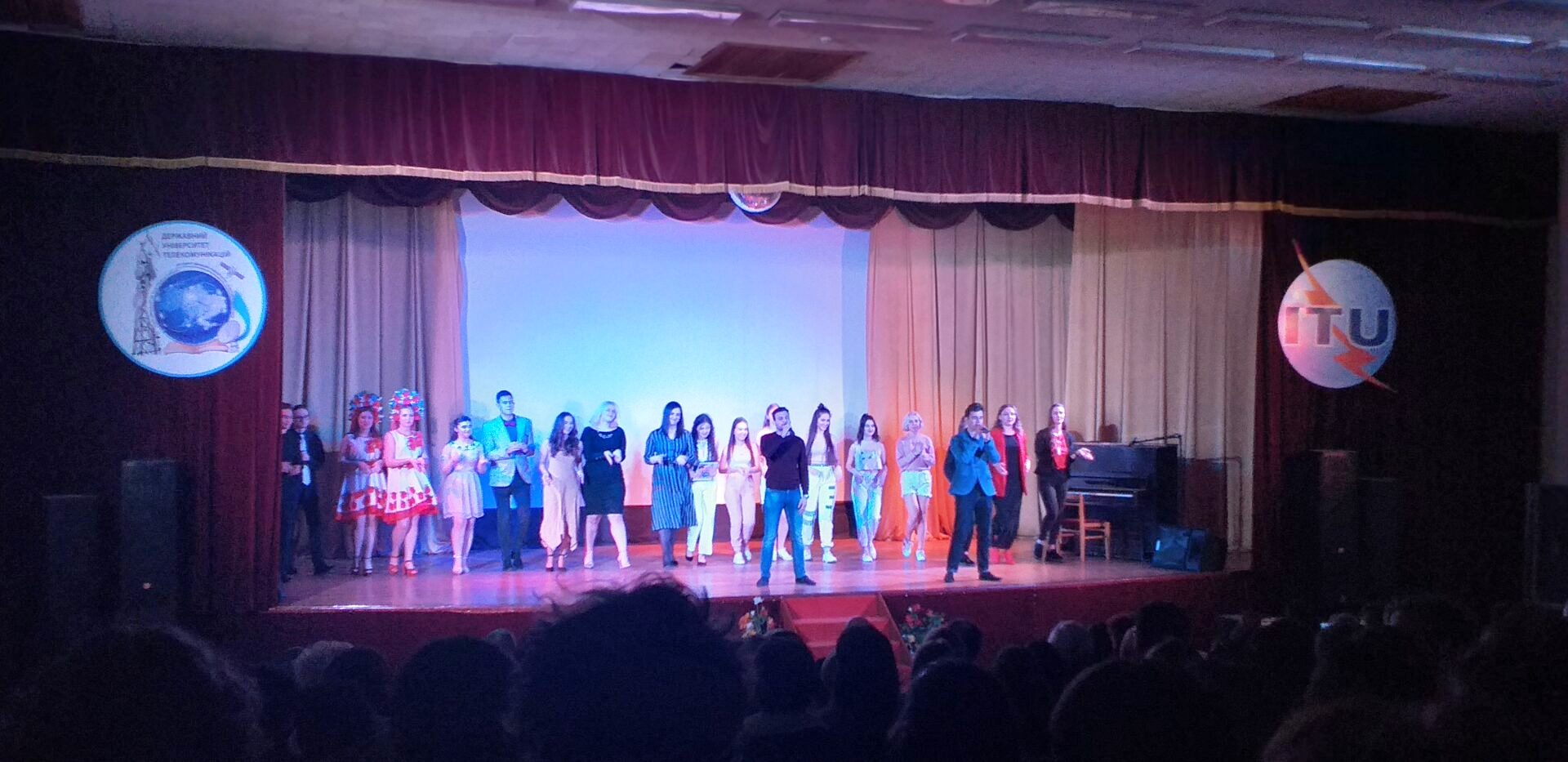
On 5 March 2020, the State University of Telecommunications in Kyiv organised an event to mark International Women’s Day.
The programme featured several forms of student performance, including singing, dancing and piano music. Students from different years of study could take part in such activities. According to information available at the time, participation was also open to international students who wished to present their talents.
The event offers a concrete example of how student-led cultural practices can become visible within a university environment.
Its significance lies less in the scale of the occasion than in the relationships it establishes between the institution, participants and audience.
What happens when a university provides a stage on which students are not merely learners, but also contribute directly to the cultural programme?
A stage within an institutional setting
The event held on 5 March 2020 took place within a university-organised framework.
The institution provided a venue, coordinated the programme and created the practical conditions necessary for the event to take place.
In doing so, it made room for cultural activities that do not ordinarily form part of academic teaching.
This organisational responsibility does not mean, however, that the university itself produced every artistic contribution.
Students brought their abilities, interpretations and preparation to the programme.
The university stage therefore emerged from two distinct but complementary contributions.
The institution provided the physical and organisational setting, while the participants shaped an important part of its cultural content.
This relationship helps explain how certain university activities can encourage student involvement.
The institution does more than organise an event for an audience. It also creates opportunities for its students to participate actively in what others will experience.
Participating rather than simply attending
Students occupy different positions within university life.
They attend classes, complete assignments, sit examinations and take part in activities organised by their institution.
Yet attending an event is not the same as contributing to its production.
When students perform on stage, sing, dance or play an instrument, they temporarily become part of the group shaping the event itself.
They are no longer simply recipients of an activity organised by the university.
Their own contributions become part of the programme presented to others.
This participation can make abilities visible that are not directly connected to a student’s academic discipline.
Someone studying a technical or scientific subject may also be an accomplished musician or dancer. Fellow students and lecturers may know little about that aspect of the person’s life.
A cultural event creates an opportunity for these abilities to be recognised in a different setting.
It can temporarily broaden how members of the university community perceive one another.
Artistic participation does not replace students’ academic roles. Rather, it offers an additional means of expression within the institutional environment.
Cultural practices at a technical university
The setting of the State University of Telecommunications adds another dimension to this observation.
At an institution primarily associated with technical and scientific education, a cultural event temporarily changes how certain spaces are used.
An area within the university becomes a setting for musical and choreographic performances.
The skills brought into focus are not necessarily those normally assessed through academic coursework.
Musical ability, stage presence, the preparation of a performance and cooperation with others become relevant within a shared space.
This temporary change does not mean that the university’s educational mission has been transformed.
It demonstrates that a higher education institution can accommodate different forms of collective activity.
Culture does not necessarily appear here as the result of a separate, formally established cultural policy.
It emerges first through practices contributed by students and made possible by an institutionally organised event.
This distinction allows cultural activities within university life to be examined without assigning them a wider institutional significance that has not been demonstrated.
Ukrainian and international students: opportunities for shared participation
The original account published in 2020 noted that such activities were not reserved exclusively for Ukrainian students.
International students could also express an interest in participating and presenting their abilities.
This openness is worth considering in the context of a university bringing together students from different educational and geographical backgrounds.
It created an opportunity to take part in the same institutional event.
However, the existence of this opportunity must be distinguished from documented participation.
The available information does not establish that every group of students was represented on stage or that specific intercultural encounters were deliberately organised.
An opportunity for shared participation may encourage contact, but it does not prove that meaningful relationships have already developed.
This distinction matters.
The presence of students from different countries within an institution does not automatically produce intercultural exchange.
People may share a space without forming lasting relationships. They may attend the same performance without understanding all the cultural references or personal experiences behind it.
Cultural activities can nevertheless create situations in which such encounters become possible.
Cultural visibility without compulsory representation
University events can contribute to making different artistic practices visible.
Such visibility also raises questions about how participants are perceived.
When an international student appears on stage, observers may interpret the performance primarily through that person’s country of origin or assumed cultural identity.
The student may then be treated as a representative of an entire national or cultural community, even when participating solely as an individual.
This interpretation risks reducing personal interests and abilities to a prescribed identity.
A student may choose to sing because they enjoy music, to dance because they have developed that skill, or to perform because they wish to contribute to university life.
Their participation does not necessarily constitute an official representation of their country or community.
Recognising this distinction is particularly important in international educational settings.
A performance may introduce an audience to an unfamiliar artistic or linguistic reference without requiring its performer to represent an entire culture.
Cultural visibility can therefore be understood as an opportunity for individual expression rather than an obligation to embody a collective identity.
Informal mediation in university life
Cultural performances can create opportunities for exchange between students.
A song may introduce an unfamiliar musical repertoire. A dance performance may generate curiosity. Participants and spectators may discuss their impressions after the event.
Such situations can become starting points for discovering other people’s artistic practices and experiences.
Their effects should not, however, be exaggerated.
Watching a performance does not necessarily mean understanding all its references or developing a lasting relationship with the person performing.
Mediation operates here on a more modest scale.
Here, mediation is neither a profession nor a formal programme.
It may emerge when an unfamiliar practice becomes visible and creates an opportunity for attention, conversation or exchange.
This perspective relates to the informal mediation processes that can accompany international student mobility.
Students may help make their surroundings more understandable through everyday communication, personal relationships and shared activities.
Such contributions are not always associated with formally assigned responsibilities.
They frequently develop within ordinary social encounters.
The audience as part of cultural visibility
A stage does not generate public visibility independently of its audience.
Spectators observe, respond, applaud and may discuss what they have experienced.
The relationship between performers and audience is therefore an essential element of a cultural event.
Student performances become publicly visible because they take place before other members of the university community.
This relationship can temporarily change how particular participants are perceived.
A student known primarily through an academic programme may become visible through musical or choreographic abilities.
Such recognition nevertheless remains connected to the event.
It does not guarantee lasting artistic recognition or a permanent place for these practices within the university’s activities.
A distinction must therefore be made between the temporary visibility created by an event and the existence of a sustained institutional framework for cultural participation.
One may exist without the other.
Photography as a field archive
The photograph accompanying this publication was taken directly during the event on 5 March 2020.
It is therefore not a generic image selected years later to illustrate an analysis of university life.
It forms part of the documented experience itself.
Its significance lies in preserving a visual record of a specific moment: a cultural event at a university in Kyiv, with a stage, participants and an audience.
Institutional photography often focuses on official proceedings and individuals highlighted by event organisers.
Personal photographs may preserve different aspects of the same occasion.
The chosen framing, the presence of spectators and the surrounding environment can all become elements of documentation.
A single photograph cannot reconstruct the entire course of an event.
It can, however, preserve visual evidence that complements the information available through other sources.
In this case, the photograph reinforces the publication’s value as a field archive based on direct observation.
University internationalisation through everyday practices
The internationalisation of higher education institutions is frequently described through institutional indicators.
Numbers of international students, cooperation agreements, partnerships and mobility programmes provide ways of measuring certain aspects of international engagement.
These indicators are important, but they do not necessarily reveal how students experience university life in practice.
A cultural event offers another level of observation.
It draws attention to opportunities for participation, student visibility and the relationships that may emerge within shared spaces.
Internationalisation then becomes a social experience, extending beyond administrative and academic structures.
This perspective connects with questions raised by international educational pathways in Kyiv, particularly the role of language, relationships between students and access to different aspects of collective university life.
A single artistic event is not sufficient evidence of successful university integration.
It can nevertheless reveal some of the practical conditions that make participation possible.
The opportunity to perform, attend an event or share a cultural experience can contribute to understanding the university as a social environment as well as a place of education.
Cultural encounters without a diplomatic mandate
The international composition of a university might encourage the interpretation of such an event through the concept of cultural diplomacy.
In this case, however, that description would go beyond the available evidence.
The event on 5 March 2020 was a university activity organised to mark International Women’s Day.
The documentation does not establish that it was a diplomatic initiative, an official encounter between states or a formal programme of international cultural relations.
Student performances were not necessarily associated with a mandate to represent particular countries.
Making this distinction does not diminish the event’s significance.
On the contrary, it helps describe more accurately what can be observed.
A university provided an organisational framework. Students contributed artistic performances. An audience participated in a shared cultural occasion.
At this level, cultural encounters can take place without being organised as diplomatic programmes or institutional partnerships.
A university scene before major transformations
The date of 5 March 2020 gives this archive particular significance when viewed today.
Shortly afterwards, the Covid-19 pandemic would profoundly change the conditions of university life in many countries, including opportunities for gatherings and the organisation of teaching.
Two years later, Russia’s full-scale invasion of Ukraine would bring far more extensive disruption to education, everyday life and international mobility.
These subsequent events should not lead us to interpret the March 2020 gathering solely through the crises that followed.
The students present that day were participating in a cultural activity within the ordinary life of their university.
It is precisely this everyday character that gives the photographic record additional documentary value today.
The image preserves a moment of collective university life from a period whose conditions would subsequently undergo profound changes.
It also reminds us that archives do not document only exceptional events.
They preserve ordinary situations whose historical significance may become clearer with the passage of time.
Conclusion
The event held on 5 March 2020 at the State University of Telecommunications in Kyiv was neither a major cultural programme nor a formally structured initiative of international cooperation.
Its significance lies on a different scale.
The university provided an organisational setting. Students contributed artistic performances. Abilities that were not necessarily visible through regular academic activities received temporary public attention.
The event also offered opportunities for shared participation among students from different educational and geographical backgrounds.
These conditions are not sufficient to demonstrate the existence of a comprehensive intercultural policy or lasting relationships between everyone involved.
They do show how a university can temporarily become a space for artistic expression, collective participation and possible encounters.
The event illustrates a dimension of higher education that mobility statistics and institutional agreements cannot easily capture: the everyday practices through which students contribute to shaping their shared environment.
The photograph taken on site now preserves part of that experience.
It reminds us that university internationalisation does not take place exclusively through formal programmes. It can also be experienced in spaces where students encounter one another, present their abilities and become active participants in the collective life of their institution.
Editorial note — This article is based on a text by Blaise Puala originally published on Ciel-Bleu.org on 5 March 2020 from an activity directly observed and photographed at the then State University of Telecommunications in Kyiv — today the State University of Information and Communication Technologies. It has been fully reviewed, revised and re-edited for the Kultur Insights library in order to preserve its value as a field archive while refocusing the analysis on student participation, cultural visibility and the forms of mediation produced within the university environment.