The Francophone Games are neither solely a sporting event nor simply an international cultural festival.
Their particularity lies in bringing sporting competitions and artistic contests together within a single international framework primarily aimed at young participants from across the Francophone world.
From 28 July to 6 August 2023, the ninth edition took place in Kinshasa, Democratic Republic of the Congo.
Song, literature, photography, painting, sculpture, dance, digital creation and street arts appeared alongside athletics, football, basketball, judo and other sporting disciplines.
This coexistence gives the Games a distinctive position among international events.
They do not only bring athletes together.
They also organise the circulation of artists, cultural practices, languages, representations and institutions emerging from very different contexts but brought into relation through the institutional framework of the Francophonie.
The Kinshasa edition therefore raises a broader question:
what happens to an institutional Francophone space when, for several days, it takes physical form through artists, athletes, ceremonies, infrastructure and audiences?
Kinshasa as a Francophone stage
Hosting the Games gave Kinshasa a particular form of visibility.
For several days, the city became a meeting point for delegations representing different states and governments belonging to or associated with the Francophonie.
This centrality was not only diplomatic or ceremonial.
It materialised in stadiums, performance venues, cultural competitions, ceremonies and infrastructure prepared for the event.
The Francophonie temporarily ceased to exist only as an international institution or an abstract network of French-speaking territories.
It became situated.
People met.
Works were presented.
Competitions took place.
Languages, accents and cultural practices circulated.
For the duration of the Games, Kinshasa became a physical infrastructure of the Francophone space.
The opening ceremony as a narrative of city and country
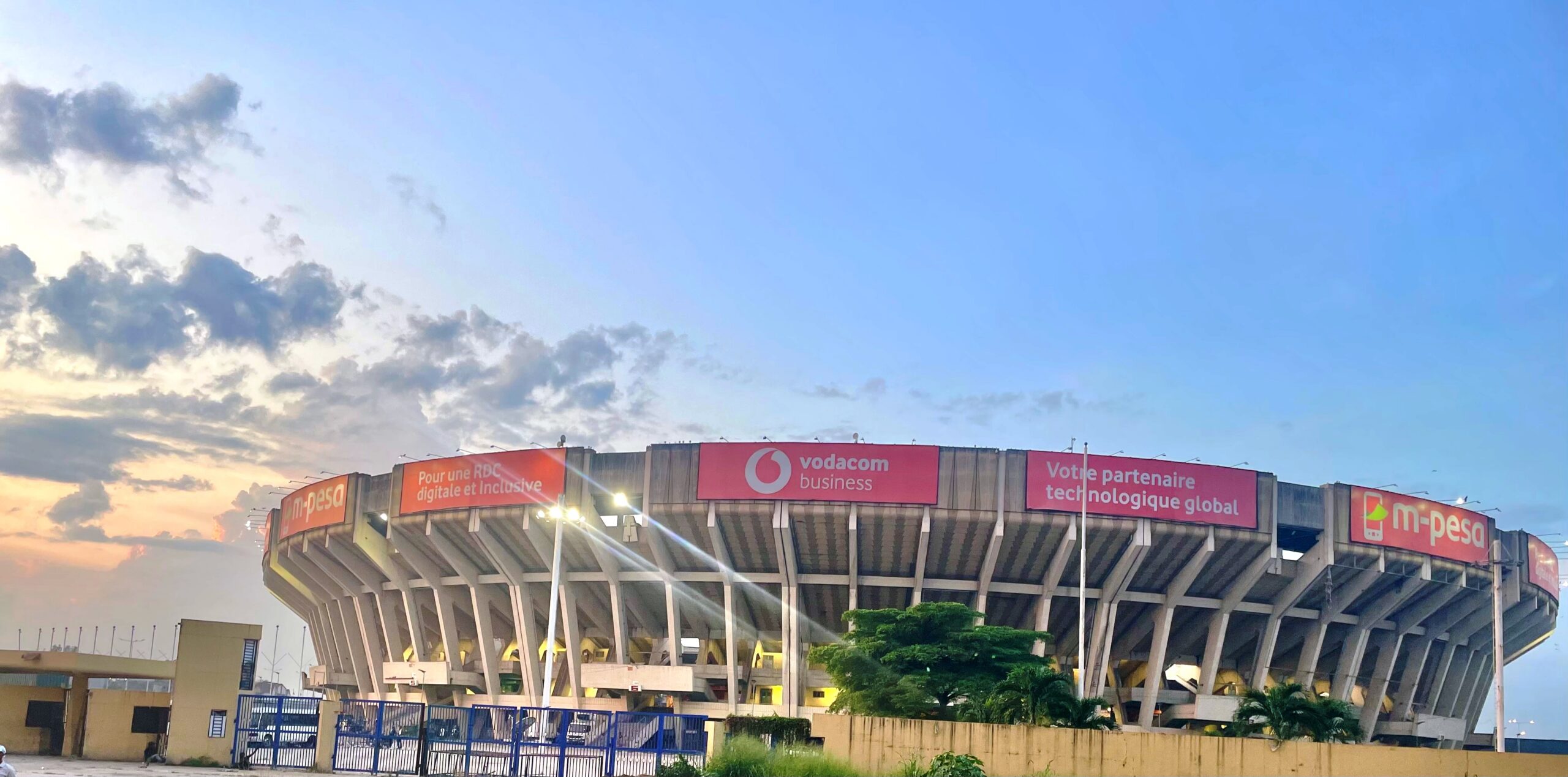
The opening ceremony at Stade des Martyrs on 28 July 2023 made this dimension especially visible.
Following the parade of delegations and official protocol, the performance incorporated several references to Congolese society and to Kinshasa.
Rumba.
Sape.
Urban life.
Performance.
References to the country’s landscapes and cultural imaginaries.
Popular music.
Fally Ipupa’s presence in the final part of the ceremony reinforced the connection between the event and contemporary Congolese cultural production.
The ceremony was not, of course, a comprehensive representation of the Democratic Republic of the Congo.
Like any large-scale cultural staging, it selected certain signs in order to create a narrative immediately readable by a broad audience.
It therefore presented a particular representation of Congo and Kinshasa within an international Francophone framework.
Representing a territory means selecting
This selection deserves attention.
An international ceremony cannot display the full cultural diversity of a country.
It necessarily condenses.
A few practices.
A few references.
A few images.
A few artists.
These elements temporarily become the carriers of a much wider representation.
The issue is not that selection exists.
Selection is unavoidable.
The question is how it is produced.
Which elements become recognisable enough to represent a territory?
Which artists are placed at the centre of the narrative?
Which cultural practices acquire international visibility?
Which remain outside the frame?
The Games therefore become a space in which local cultural production encounters mechanisms of international representation.
Cultural competitions are not merely an accompanying programme
The cultural dimension of the Games does not end with the ceremonies.
It is built into their institutional architecture.
The Kinshasa edition included eleven cultural competitions covering fields such as song, literature, photography, painting, sculpture and installation, dance, hip-hop and digital creation.
This distinguishes the Francophone Games significantly from many other international sporting events.
Young artists are not invited simply to entertain audiences between competitions.
They are themselves competitors.
Their works are evaluated.
Awards are given.
Artistic trajectories may benefit from the resulting exposure.
Culture therefore occupies an institutional space of its own within the Games.
A stage for young Francophone artists
This particular structure also offers another way of understanding the Francophonie.
It is not only a language policy or diplomatic framework.
It also operates as a network of professional circulation.
For a young photographer, writer, singer, dancer or visual artist, participation in the Games means entering an environment in which artists, institutions, delegations, professionals and audiences from multiple territories can meet.
The visibility produced by the Games can therefore serve practical functions.
Presenting work.
Encountering other practices.
Comparing approaches.
Entering new networks.
Potentially developing a trajectory beyond the national context.
This circulation should not be assumed to produce an international career automatically.
But the Games create conditions in which such circulation becomes possible.
A genuinely plural Francophonie
The idea of a “Francophone space” must nevertheless be used carefully.
Participants do not come from a common culture.
They do not necessarily have the same relationship with the French language.
They belong to highly diverse historical, political and linguistic contexts.
French may be an official language, a language of administration, education or artistic creation, or simply one language among several others in use.
Institutional Francophonie should therefore not be confused with cultural homogeneity.
The Games reveal plurality instead.
A shared language or institutional framework may facilitate encounters without erasing differences between the societies involved.
Kinshasa does not merely host the Francophonie — it reshapes it
The host city is never neutral.
Holding the Games in Kinshasa means that the Francophone institutional space encounters an African metropolis with its own cultural practices, rhythms, artistic scenes and forms of sociability.
The international event is therefore not simply placed onto the city.
It enters into relation with it.
Congolese rumba, local artists, Kinshasa audiences, venues and infrastructure in turn shape the experience of the Games.
This relationship matters.
It prevents the Francophonie from being understood as a system that circulates everywhere in exactly the same form.
Each edition is reconfigured by its host territory.
An event preceded by postponements and uncertainty
The Kinshasa edition did not emerge from a straightforward organisational context.
Initially scheduled earlier, it was postponed, first within the context of the pandemic and later because of delays involving required infrastructure.
As the opening approached, questions also remained around health, security and organisational conditions.
Some participants eventually withdrew.
Québec decided not to send its delegation of athletes and artists.
French participation was reduced in some sporting disciplines.
The Wallonia-Brussels Federation also limited part of its participation.
These decisions did not mean that Kinshasa itself was equivalent to the conflict areas in eastern Democratic Republic of the Congo.
They do, however, show that the organisation of an international event is shaped by risk assessments, national decisions by participating delegations and confidence in the conditions offered by the host country.
Kinshasa should not be confused with eastern DRC
This geographical distinction is essential.
Fighting involving, among others, the M23 was taking place thousands of kilometres from Kinshasa, primarily in the east of the country.
It nevertheless formed part of the national political context in which the Games were held.
The situation was also present in political discourse surrounding the opening ceremony.
The Games therefore unfolded across several temporalities at once:
celebration,
competition,
international representation,
and national political and security concerns.
The point is not to create an artificial opposition between “culture” and “conflict”.
It is to recognise that an international cultural and sporting event does not suspend the context in which it takes place.
Presence and absence both become significant
At an international event, absence can become as visible as presence.
When a delegation reduces or cancels its participation, that decision itself produces a message.
It draws attention to organisational conditions.
It alters the composition of the event.
It can become a media story independent of the sporting and cultural competitions.
Kinshasa 2023 therefore shows that the institutional map of the Francophonie does not always correspond exactly to the map of those who participate in a specific event.
Institutional membership and practical participation are different realities.
International visibility as a resource — not a guarantee
For the Democratic Republic of the Congo, hosting the Games undoubtedly created a period of heightened international exposure.
The city, infrastructure, competitions, ceremonies and audiences circulated through media coverage.
Such visibility can allow a territory to show images other than those with which it is commonly associated internationally.
But caution is necessary.
A period of intense media exposure does not automatically transform a country’s international image.
Nor does it resolve political, economic or social difficulties.
Visibility is a resource.
Its effects depend on what is shown, how it is received and what remains after the event.
Infrastructure as another narrative of the Games
Infrastructure also played an important role in preparations for Kinshasa 2023.
Facilities were constructed or renovated to accommodate competitions and participants.
Congolese authorities presented these investments as resources intended to remain useful beyond the event itself.
This raises the familiar question of legacy surrounding major events.
What remains after the ceremonies?
Are the facilities used?
By whom?
With what resources for maintenance?
The success of an event cannot therefore be evaluated only during the few days in which it attracts intense visibility.
Its subsequent effects must also be considered.
Culture as a space of visibility, not merely an instrument
A simplified analysis might view culture only as a tool through which institutions or states seek to project a positive image.
That interpretation is insufficient.
Artists are not simply instruments of communication.
Works have meanings of their own.
Cultural competitions generate their own professional stakes.
Audiences interpret artistic proposals in different ways.
Debate may emerge.
Programming decisions may be contested.
The cultural dimension of the Games should therefore be understood as a relatively autonomous space within a wider institutional structure.
It contributes to the visibility of the event without being reducible to that function.
Shared language, unequal conditions of circulation
The Games also reveal another tension within the Francophonie.
Sharing an institutional space does not mean possessing equal resources.
Delegations do not have the same financial capacities.
National cultural sectors do not have the same infrastructure.
Artists arrive with very different levels of access to professional networks, media and opportunities for international mobility.
The stage may be shared.
The conditions for entering it are not necessarily equal.
Analysing the Games as a space of circulation therefore requires attention not only to the encounters they create but also to the asymmetries participants bring with them.
A Francophone space temporarily made visible
For ten days, Kinshasa gave a particular material form to the Francophonie.
Delegations were present.
Competitions took place.
Artists presented their work.
Audiences circulated.
Ceremonies constructed representations.
Media produced and distributed images.
This concentration made visible a network that is ordinarily far more dispersed among institutions, states, governments, associations, artists and territories.
The Games can therefore be understood as a temporary infrastructure of encounter.
They do not represent the Francophonie in its entirety.
They produce one temporary configuration of it.
Conclusion
The 2023 Francophone Games in Kinshasa cannot be reduced to a celebration of the French language, a sporting event or an instrument of political representation.
Their significance lies precisely in the articulation of several dimensions.
Youth.
Sport.
Artistic creation.
Institutions.
Host city.
International circulation.
Media visibility.
And political context.
In Kinshasa, these dimensions came together in an edition marked by substantial local mobilisation, significant cultural and sporting programming and material investment, but also by earlier postponements and concerns that led some delegations to reduce or cancel their participation.
This does not make the Games less cultural.
It demonstrates instead that international cultural events always take place within concrete political, social and infrastructural contexts.
The Francophonie made visible in Kinshasa therefore appears neither as a homogeneous community nor as a purely institutional construction.
It takes the form of a temporary space of encounter traversed by unequal resources, choices of representation, mobility, absences and tensions.
It is precisely this complexity that makes the Games a valuable object for examining contemporary relationships between culture, international cooperation and visibility.
Editorial note — This analysis is based on a re-edition of a news article published on Ciel-Bleu.org on 29 July 2023, the day after the opening of the 9th Francophone Games in Kinshasa. The source text drew in part on reporting by Agence France-Presse and carried the credit “Ciel-Bleu/AFP”. The present version has been fully revised, verified and repositioned for the Kultur Insights library in order to preserve its documentary value while clearly distinguishing the original news report from Ciel Bleu Kultur’s current editorial analysis.